Before Saturday, decide whether to keep, change or cancel the hike. A recent storm, uncertain road access or a tired group can turn an ordinary trail-and-camp outing into a poor choice. Good outdoor trip planning matches the route, people and equipment to current conditions. The goal is a deliberate trip that leaves the place no worse for your visit.
Choose the trip your conditions can support
Start with the least flexible part of the plan. A campsite requiring a long approach creates different risks from a short day walk, especially if you arrive late. If one person is recovering from an injury, the steepest section may set the limit for everyone. Decide the acceptable distance, elevation, exposure and remoteness before enthusiasm takes over.
For friends heading to a backcountry campsite, ask whether everyone can carry the required overnight gear, where a realistic turnaround point lies and what happens if the pace is slower than expected. A route is not suitable simply because it is open or someone completed it under different conditions.
Choose a backup that is genuinely usable, such as a shorter trail, established campground or nearby day-use area. It can preserve the purpose of the outing when the original plan no longer fits.
Check trail conditions and access from the ground up
Trail conditions involve more than the forecast. Rain may leave a well-drained path manageable while making a creek crossing unsafe. Snow, fallen trees, mud, heat and smoke can affect speed, visibility and emergency access. Check the latest information from the land manager, park authority or another official source, and confirm that it covers the exact route.
Confirm that the approach road, trailhead, gate and parking are available for your vehicle and arrival time. Seasonal closures, permits, campsite reservations and fire restrictions can change, with requirements differing between public lands and local authorities. Verify them before leaving; do not treat an old post, map note or social media comment as permission.
If information is unclear, call the relevant office or choose a less dependent route. An extra hour of research is cheaper than discovering a closed trailhead after a long drive.
Build hiking safety around decisions, not bravado
A useful safety plan gives everyone permission to stop. Share the route, expected return time, vehicle details and emergency contact with someone who is not on the trip. Make the plan specific enough that a delayed return means something, while recognizing that rescue response and phone coverage cannot be assumed in remote areas.
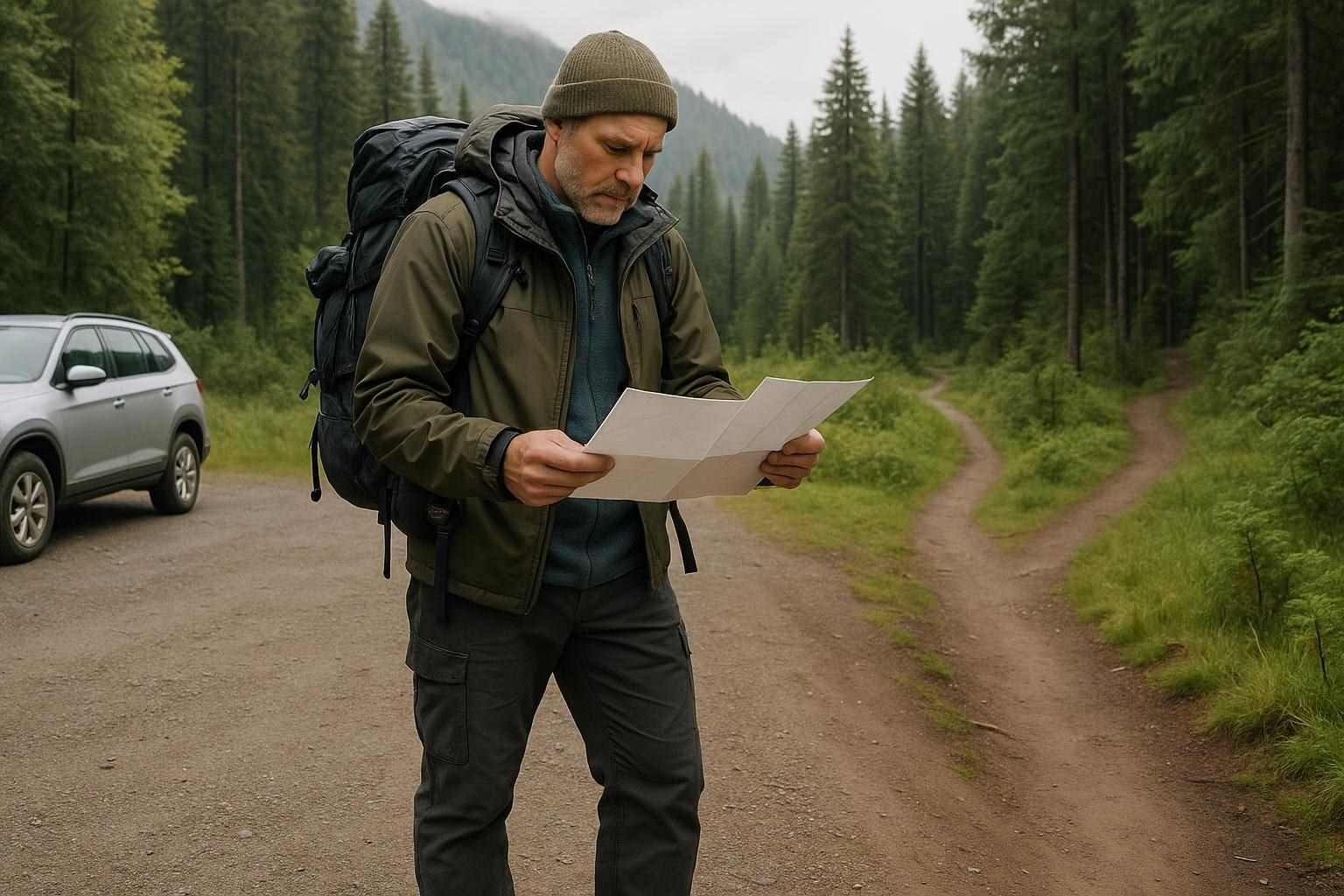
Set decision points before starting. If the group reaches a flooded crossing, loses the marked route, runs low on daylight or finds that someone is becoming unwell, the next step should be clear: turn around, use the backup route or end the trip. A map and offline navigation aid help, but they do not replace attention to landmarks, weather and the group.
Do not let a reservation, sunk travel cost or social pressure decide for you. Conditions are information, not a test of commitment. Tell someone at home if the plan changes, especially when the new route has a different finish point.
Pack for the setback you can reasonably expect
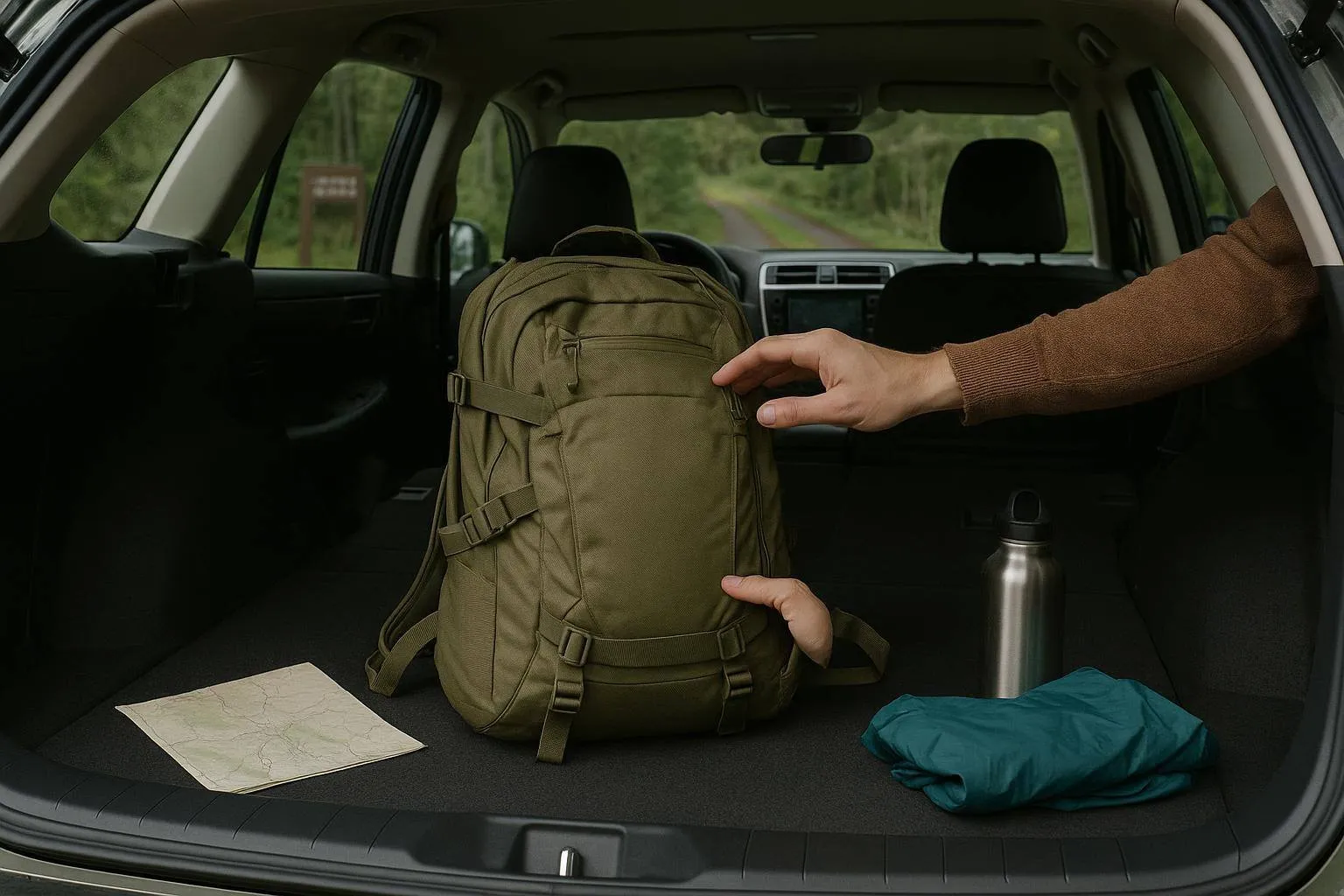
Packing should answer one question: what would make this trip manageable if it took longer than expected? Essentials vary by route and season, but usually include navigation, sufficient water or a verified treatment method, extra food, weather protection, a light source, first-aid supplies and a way to communicate or signal for help.
For an overnight outing, add shelter, insulation for the forecast and a method for storing food securely where required. Test unfamiliar equipment at home. A stove that is difficult to light, an unchecked water filter or a rain layer buried in the bag can create avoidable problems.
Use this checklist before departure:
– Route information, offline map and backup navigation method
– Water plan, food and spare energy for delays
– Weather-appropriate layers, rain protection and emergency insulation
– First-aid supplies, light source and communication device
– Shelter, sleep system and cooking equipment for overnight trips
– Waste bags, trowel where permitted and required permit or reservation details
Pack for the plan's weakest link, not the most optimistic forecast. Keep heavy or frequently used items accessible, and make sure everyone knows what the shared equipment does.
Keep the campsite smaller than your presence
Responsible camping begins with site selection. Use an established, durable area where one exists rather than widening a clearing or creating a tent spot beside fragile ground. Keep tents, chairs and cooking within the disturbed footprint. Avoid vegetation, wet ground and places where runoff can carry food scraps or soap toward water.
Leave No Trace is a set of choices. Carry out everything you bring, including food residue and small packaging. Follow local rules for human waste, fires and washing. Fire restrictions can change, and some places prohibit fires entirely, so check current official guidance before packing fuel or fire-making supplies.
Clean spills, control scented items and never feed wildlife. Animals that associate people with food can create problems for later visitors and themselves.
Make the return part of the plan
Before heading home, inspect the site and trail junctions for anything you may have missed: a bottle cap, tent peg, tissue, food crumb or piece of cord. Removing someone else's small, safe-to-carry litter can be a practical act of conservation, but do not handle hazardous or unknown materials.
Record useful observations for the next decision. Was the access road rougher than expected? Did the water source fail? Was the route poorly marked, crowded or vulnerable to erosion? Report meaningful hazards through the responsible land manager's current channel rather than relying only on a casual online post.
The better trip is not always the longest or the one that survives every original plan. It is the outing where conditions were checked, access was understood, the group knew when to turn back and the landscape received no extra burden from the visit.